Trending

Autumn is when the hedgerows finally pay out. Hazels are dropping, sloes are blue with bloom, and one warm, wet week will push the first ceps through the leaf litter. It is also the season when a careless identification sends people to hospital, which is why foraging rewards patience far more than enthusiasm.
What follows is a working checklist for the season: what to look for, what to leave alone, and the lookalike pairs that catch people out most often. Treat it as a starting point rather than a field guide. Nothing here replaces learning a species properly — from a book, on a course, or beside someone who has picked it for years — before it goes into your basket.
Permission comes first. In England and Wales, the access rights created by the Countryside and Rights of Way Act allow walking on most open country, and picking mushrooms, fruit, foliage and flowers for your own consumption is generally accepted on that land. It is not a free-for-all. Nature reserves, Sites of Special Scientific Interest and private gardens have their own rules, byelaws and signage, and picking for sale or digging up plants without the landowner's permission is a different matter entirely. Scotland has its own, broader access arrangements with their own caveats. If it is not clear whether you are welcome, ask — or walk on.
Kit matters less than habit, but a few things help. A basket or cotton bag keeps fungi from sweating; a plastic bag turns them to mush. A small knife cuts cleanly. A regional field guide and a phone camera are worth more than any gadget. Take a friend if you can — a second pair of eyes is the cheapest safety measure there is.
Tell someone where you are going and when you expect to be back. Carry a charged phone, a basic first aid kit, and a note of your location. Most forays are uneventful, but a twisted ankle in a remote wood is a lot easier to manage if someone knows where to find you.
Autumn nuts are the low-risk part of foraging, with one obvious exception. Learn the casings and you will not go far wrong.
Hazel nuts sit in a ragged green husk, often in twos or threes, and the shell is short and round with a pale scar at the base. Squirrels usually get there first, so check the tree rather than the floor, from late August into September.
Sweet chestnuts arrive in a densely spiny husk that hurts to handle, holding two or three flat-sided nuts with a small tuft at the point. Horse chestnuts — conkers — look nothing like them once you know the difference: a thick green husk with sparse, blunt spines and one large, glossy, round nut inside. Conkers are not edible and will make you ill.
Beech mast is edible but fiddly, tucked into prickly four-lobed husks, and it is vital winter food for mice, jays and deer. Take a handful, not a bagful. Walnuts are usually planted rather than wild, so check whose tree you are picking from, and expect black-stained hands for a day or two.
Acorns are abundant and nourishing, but they are bitter with tannins and need leaching before they are edible. Shell them, grind them, and soak the meal in repeated changes of water until the bitterness goes, then dry and use as flour. It is a labour of love, and the wildlife depends on them more than you do — so take only a small share.
Berries are where beginners feel safest, and mostly they are. The rule worth repeating is that several common autumn berries are only food once they have been cooked.
Blackberries need no introduction. Pick above knee height where dogs and livestock have not been, and rinse them before eating. Sloes are so astringent raw that your mouth will fur up; a frost or a night in the freezer fixes them, and they make excellent gin and jelly. Rowan berries contain parasorbic acid and should be cooked. Elderberries must be cooked too, with the stalks stripped off — raw berries and stems cause nausea. Hawthorn haws are mealy but fine in jellies and fruit leathers.
Then there are the ones to walk past. Yew is the important one: its soft red arils look like a friendly berry with a hole in the end, but every part of the tree except that fleshy coat is toxic, and the seed inside is lethal. Leave yew alone entirely, and teach children to do the same. Black bryony and woody nightshade also hang red berries in hedges. Deadly nightshade — belladonna — has shiny black berries and dull green leaves, and is one of the most toxic plants in Britain. If you cannot name a red or black berry with certainty, it is not food.
When identifying berries, look at the whole plant: leaf shape, whether it grows as a tree, shrub or climber, and how the berries are arranged. Blackberries are an aggregate fruit, made of many little drupelets, while deadly nightshade berries are single and glossy. A good field guide will show both, and a moment's hesitation is always cheaper than a stomach pump.
Almost every serious foraging accident in Britain involves a mushroom. Start with species that are genuinely hard to confuse — giant puffball, cep, chanterelle, field mushroom, hedgehog fungus — and learn their dangerous relatives before you ever take one home.
Then there are the mushrooms that kill. The death cap and destroying angel — both Amanita species — are responsible for most fatal mushroom poisonings worldwide. They have white gills, a ring on the stem, and a cup-like volva at the base. Any mushroom with that combination should be treated as deadly unless you are with an expert who knows otherwise. The same goes for the deadly webcap, a brown, unassuming mushroom that can cause kidney failure days after eating. There is no antidote for some of these toxins, and cooking does not destroy them.
If in doubt, leave it out. There is no mushroom worth a night in intensive care.
What you do after the pick matters almost as much as the pick itself. Mushrooms should be brushed clean with a soft brush or a damp cloth; only wash them if they are caked in mud, and then dry them promptly. Never soak them. Keep them in a paper bag or a basket, and cook them within a day or two — or slice and dry them for later. Ceps, chanterelles and field mushrooms all dry beautifully.
Berries should be rinsed and either eaten fresh, frozen, or cooked into jams, jellies and sauces. Sloes and rowans are best after a frost or a spell in the freezer. Nuts need drying thoroughly to prevent mould; spread them in a single layer somewhere airy and warm for a few weeks, then shell and store in airtight jars. Acorns need leaching before they are dried and ground.
Keep different species separate in your basket. If one turns out to be wrong, you will not have contaminated the rest. And never mix unknown
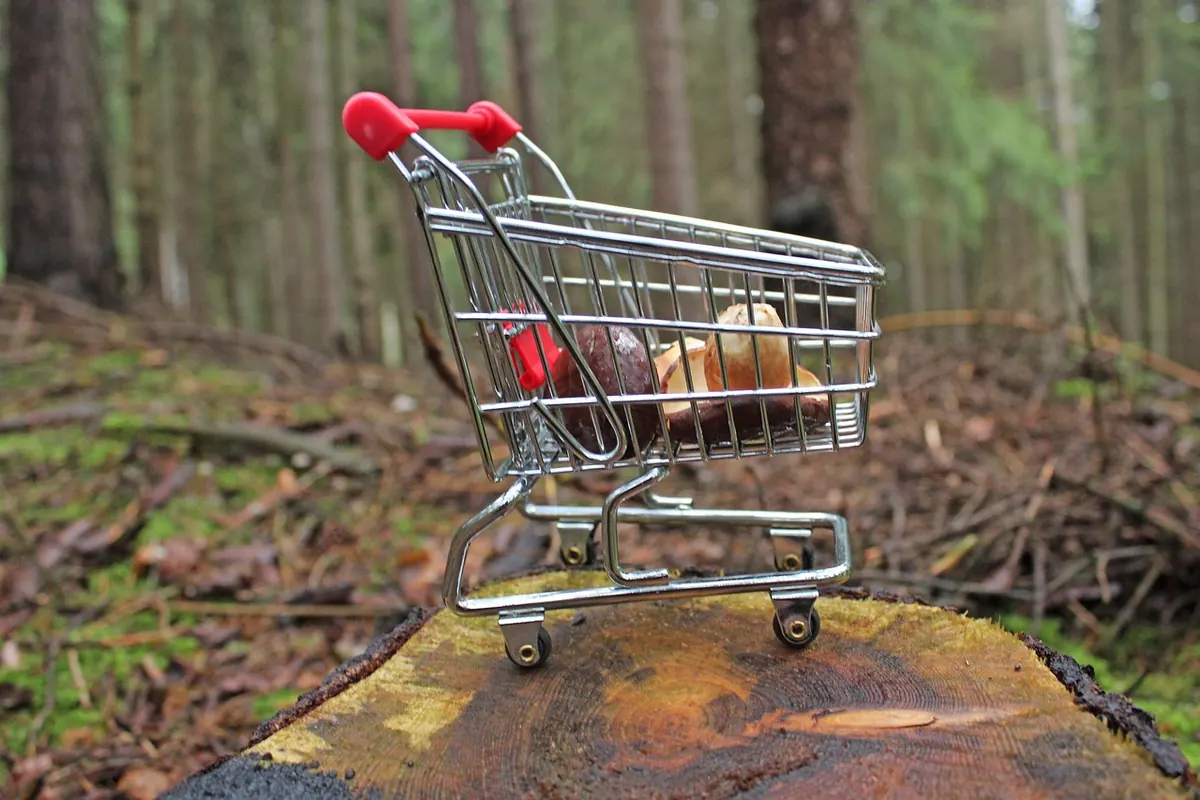
Photo: SeifenBlase / Pixabay