Trending

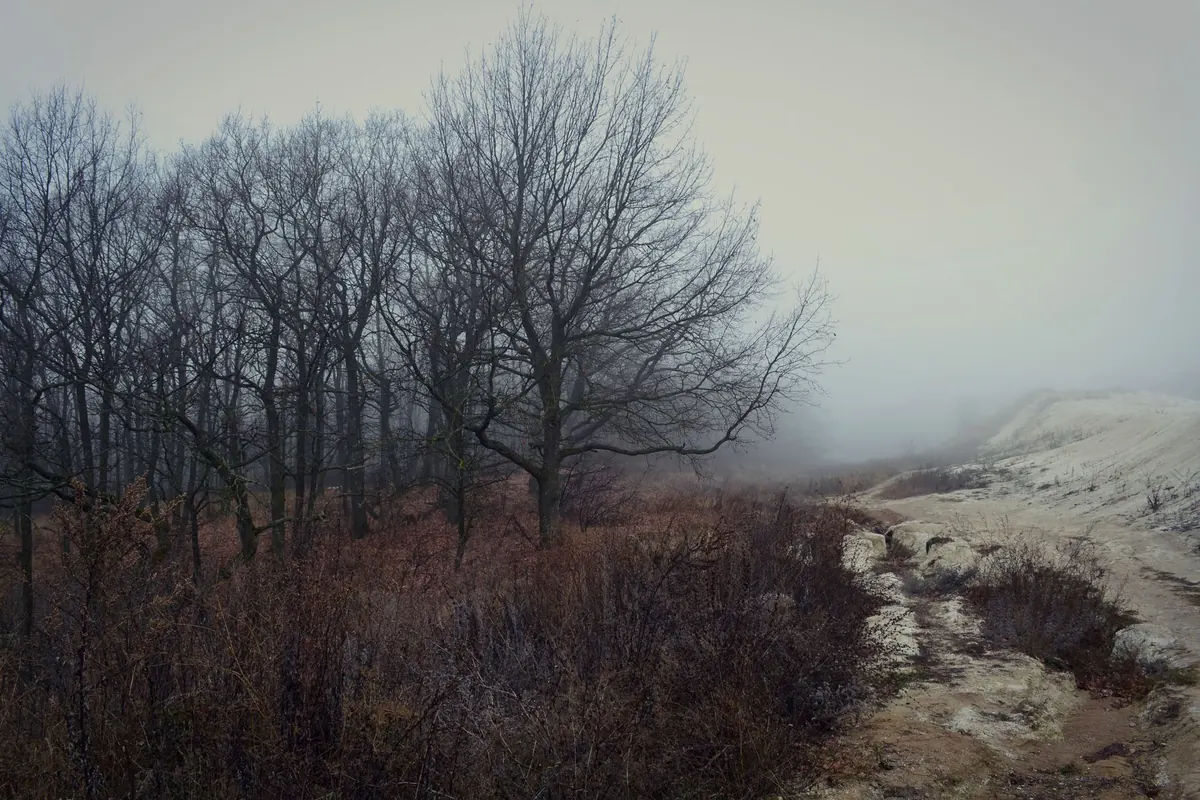
The South Downs are not, at first glance, frightening countryside. Sheep, flint walls, beech hangers, a great deal of sky. But drive the lanes between Winchester and Eastbourne and you keep passing hills with names that sound like warnings: the Devil's Dyke, the Devil's Humps, the Long Man. Each one comes with a story, and most of those stories were told long before anyone thought to write them down.
What follows is a walking guide to five of the best, with notes on telling the tales and getting back to the car in one piece. None of it asks you to believe anything. Walking a hill with a good ghost story in your head is simply a better way to spend an evening.
The Devil's Dyke is a dry valley cut into the chalk a few miles north of Brighton, and the name tells you what people made of it. The story goes that the Devil wanted to flood the Weald and drown the churches of Sussex, so he set to work with his spade, digging a channel from the sea through the Downs in a single night. He was nearly finished when an old woman in a cottage below lit a candle — or, in other versions, when a cockerel crowed and convinced him that morning had come.
Trench it deep enough and the sea will do the rest. Drown the churches, drown the farms, and leave the Downs as an island.
He flung down his spade and fled. One version of the tale has him throwing a last clod of earth into the Channel, where it became the Isle of Wight; the scratches of his spade made the Needles. The geologists offer a different account involving meltwater at the end of the last ice age, and it is no less strange.
Walk it from the Dyke car park: west along the escarpment towards Fulking, or steeply down to the valley floor at Poynings and back up. Sunset from the ridge is why most people come. The story is why you should stay ten minutes longer.
An Iron Age hillfort, a Roman temple, and a ring of beech trees traditionally planted in 1760 by Charles Goring of Wiston. Chanctonbury has more history than most hills know what to do with. The Great Storm of 1987 flattened the beeches, and the replanting somehow made the place feel stranger rather than tamer.
The famous instruction runs like this: walk seven times anticlockwise around the ring at midnight and the Devil will appear, offering you a bowl of soup in exchange for your soul. Refuse and you may escape with wet boots and a poor night's sleep. Accept, and the tale ends badly. Then there is the horse. Leave a horse tethered inside the ring overnight, the old story says, and by morning it will be found lathered and trembling, as though it had been ridden hard for hours.
Approach from Washington or Steyning — a steady climb on footpaths through farmland, easily combined with a look at Cissbury Ring. The earthworks are a scheduled monument, so keep to the path, especially where the ramparts have slumped.
West of Stoughton, near Chichester, the yew grove at Kingley Vale is one of the oddest places in southern England: trees of a girth that makes the village church look like a newcomer. Above them, on the ridge, sits a line of Bronze Age burial mounds known as the Devil's Humps.
The story says they cover the dead of a battle fought here between Saxons and Vikings, and that the yews grew from the bows the archers carried. Another version holds that the trees were planted to keep the slain in the ground. Light goes early under that canopy. You hear the wind before you feel it. Go at dusk if you like; most people do not linger.
The Long Man of Wilmington is a chalk figure close to seventy metres from head to heel, cut into the steep north face of Windover Hill. He has been explained as a Saxon god, a Roman surveyor, a giant killed on the slope, and a man who simply fell from the top, his outline traced in the turf by villagers who found him.
Walk up from Wilmington village by the bostal — a Sussex word for the steep, narrow track that climbs the escarpment — and the figure disappears as you approach, which is part of the trick of the place. Stand above him and you are on a hill with a long view and, on a grey afternoon, a fine sense of being watched.
Old Winchester Hill, above the Meon valley, carries the sort of tale that attaches itself to hillforts all over Britain: a ghostly company of soldiers, heard rather than seen, marching on certain nights. The earthworks, the barrow cemetery on the ridge and the view down the valley do most of the work.
Further north, at Waggoner's Wells near Liphook, a chain of dark ponds sits in woodland. The story is a sad and ordinary one — a waggoner drowned, and his companions dug the pools in his memory. Walk the circuit in October, when the leaves are down and the water is black, and it holds up well.
Half the pleasure of these places is being on them as the light goes. A little preparation keeps it enjoyable.
If you are walking alone at night for the first time, do it on a route you already know in daylight, and consider company until you are confident. If you are unsure about access, footpath closures or which paths are recorded as public, check the South Downs National Park and your local authority rights of way pages before you set out.
Then go. Take a flask, a torch, and one story you can tell without looking at your phone. The Downs have been keeping these tales for a long time, and they improve with a hill under them.
Photo: Darya Grey_Owl / Pexels