Trending

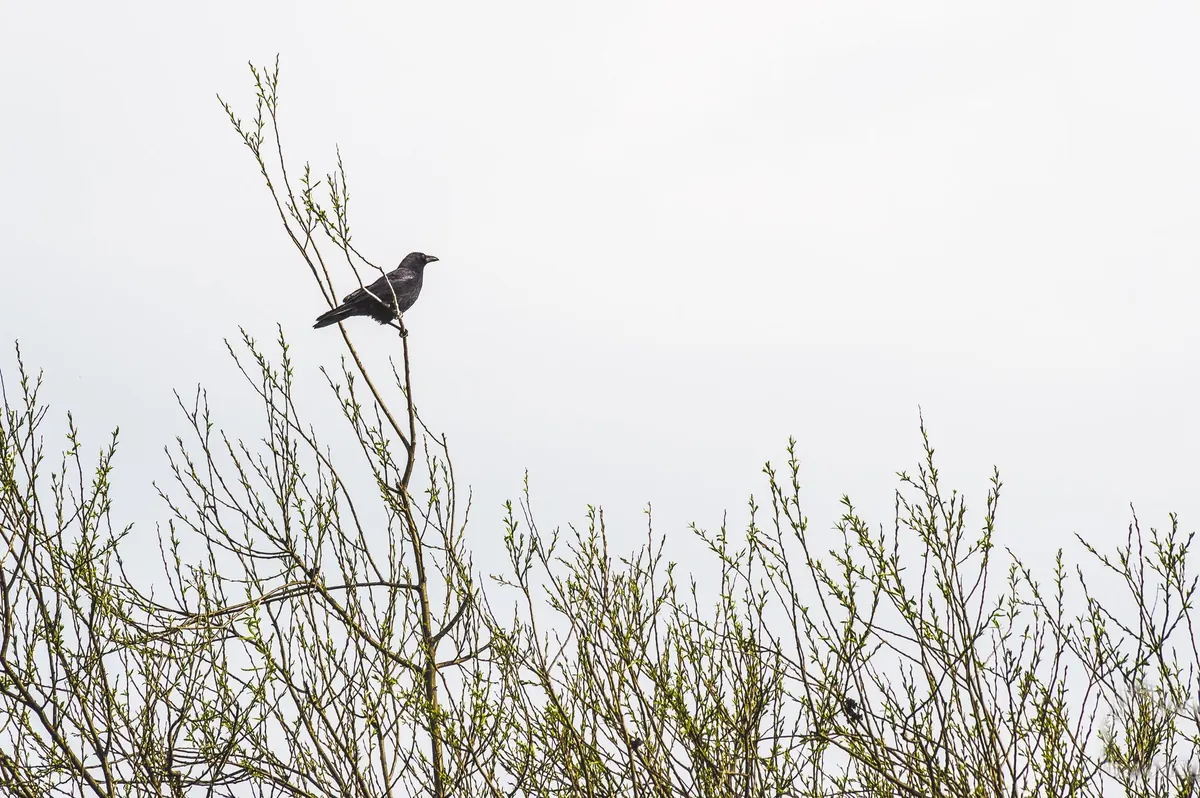
A raven's call carries. Stand on a moorland track in a stiff wind and you will hear it before you see it — a low, wooden croak, like a plank being struck, dropping out of the sky from somewhere above and behind you. It is our largest crow, our longest-lived, and by a comfortable margin the most storied bird in the British countryside. Ravens turn up in royal superstitions, in Viking war banners, in Welsh myth, and in the names of villages, rivers and crags you have probably walked past without noticing. Knowing a little of that folklore changes what you hear on a hillside.
The most famous raven story in Britain belongs to the Tower of London. If the birds ever leave, the legend goes, the Tower falls and the country falls with it. The tale is usually attached to Charles II, who is said to have ordered the birds protected after a prediction warned him of disaster. Whether he did or not, ravens have been kept at the Tower for a long time, and they are still there today: usually half a dozen or so, tended by the Ravenmaster, with their wing feathers trimmed so they seldom stray far.
There is a second London raven story, older than the first and stranger. In the Mabinogion, the head of Brân the Blessed is buried in London, on a hill facing France, and while it stays buried no invasion can succeed. Later tellings have Arthur dig it up, unwilling to be protected by anything but his own strength. Writers often marry the two stories and say the Tower ravens stand in for Brân's buried head. It is a lovely idea, but the link looks recent — which is worth remembering whenever folklore sounds too neat.
Ravens arrived in British folklore from two directions at once. From the Norse and Danish settlers came Huginn and Muninn, Thought and Memory, the birds that flew out each day to bring Odin news of the world. Sagas also describe the raven banner — a standard carried before a Norse army that was said to guarantee victory to the force it led, and death to the man who carried it. Given how thoroughly Norse families settled Orkney, Shetland, the Hebrides, the Isle of Man and northern England, it is no surprise that the raven's reputation travelled with them.
From the Celtic west came the raven as a bird of prophecy and ancestry. Brân is Welsh for raven; so is bran in Cornish and Breton, and the name lies at the root of some of the oldest stories in the Welsh tradition. In both branches of the tradition, the bird is clever, watchful and uncomfortably close to the world of the dead — a scavenger of battlefields and a messenger that tells you more than you wanted to know.
Much of the raven's darker folk reputation comes from simple observation. Ravens follow herds, armies and anything else that leaves carcases behind, so for centuries they were the birds you saw after a bad winter, a bad harvest or a bad fight. Country collections from across Britain record sayings in which a raven settling on a roof or calling at a window is taken as a warning of a death in the house. The details differ from county to county, which is exactly what you would expect from sayings passed by word of mouth.
Two related beliefs are worth knowing. The first is that it is unlucky to kill a raven. The second is that Arthur survives as one: in Cornwall and parts of the West Country, one tradition holds that the king lives on in a raven's body, and that harming the bird brings misfortune. The chough — black, with a red bill and red legs — carries a similar Arthurian reputation on the Cornish coast, and the two birds are often mixed up in retellings.
Place names are the folklore you can check against a map. Old English hræfn, Old Norse hrafn, Welsh bran and Scots corbie all mean raven, and all of them survive in the landscape. Some examples to look out for on an Ordnance Survey sheet:
Minor names matter as much as villages. Raven Crag, Raven Gill, Raven's Knowe and Raven Seat all describe the sort of broken, craggy ground where the birds nest, and they are often good pointers to a viewpoint even if no raven has flown there for decades. Two cautions. First, Hrafn was a common Norse personal name, so some of these places commemorate a man rather than a bird. Second, not every raven name is old: the village on the Yorkshire coast now called Ravenscar was renamed in the Victorian era as part of a resort scheme, replacing the older name Peak.
In the uplands, where ravens held on long after they were cleared from the lowlands, the folklore is more practical than mystical. Hill farmers knew the bird as a scavenger around lambing time and a regular at dead or dying stock, and disputes between shepherds and ravens go back centuries. Ravens travel in what the old lists of collective nouns call a conspiracy or an unkindness — terms invented by writers rather than by shepherds, but they have stuck because they suit the bird.
Watch a pair for an afternoon and you can see why. Ravens soar, roll, tumble and fly upside down for no obvious reason; they tug at sheep's wool for nest lining; they follow deer and hill walkers out of curiosity. That mix of mischief and intelligence sits behind almost every raven story in Britain, from tower to tor.
A raven is roughly buzzard-sized, with a heavy head, a shaggy throat, long fingered wings and a long, wedge-shaped tail. In flight it soars more and flaps less than a carrion crow, and the call gives it away: a deep, resonant cronk, not a crow's harsh caw. Rooks and crows have fan-shaped tails and flatter voices.
Upland Wales, the Lake District, Northumberland, the Scottish Highlands and islands, the Isle of Man, western parts of the Peak District, the North York Moors and the Cornish coast all hold resident birds. The Tower of London remains the easiest visit of the lot. Search your map for the raven place names listed above and you will usually find a crag, stream head or cliff worth a walk.
Photo: lawe filips / Pexels